
Rock is a normal part of digging on the Seacoast, and it gets handled with the right equipment rather than stopping the job. Loose boulders are dug out and moved with the excavator, and solid ledge is broken up with a hydraulic hammer on the excavator, so a foundation, a trench or a utility line still reaches the depth it needs.
Plan for Rock on Any New England Dig
Glaciers left much of New England covered in a layer of mixed soil and stone over the bedrock, which is why boulders and ledge turn up on so many lots here. Some yards show it with rock poking through the lawn, and others give no sign until the bucket finds it. Planning for rock from the start keeps a project calm and on track.
Move Loose Boulders With the Excavator
Most of the rock in a dig is loose stone and boulders, and the excavator lifts those out and sets them aside as the work goes.
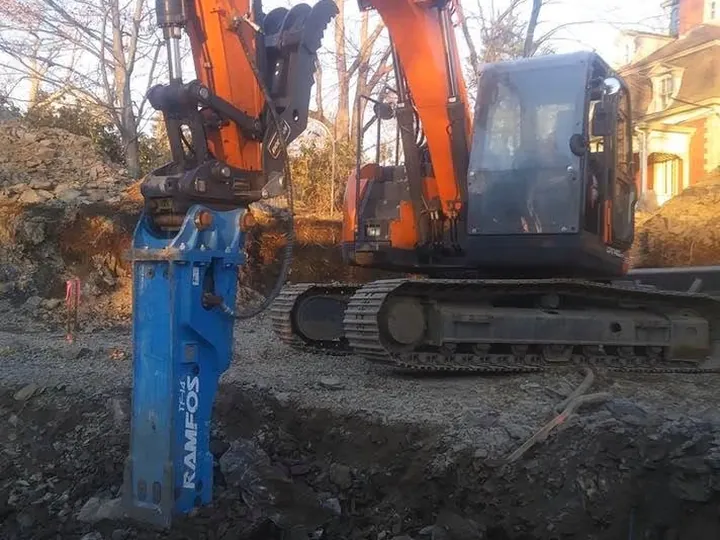
Break Up Ledge With a Hydraulic Hammer
When the dig reaches solid ledge, a hydraulic hammer goes on the excavator in place of the bucket and breaks the rock into pieces that can be dug out. That lets a trench or foundation keep going down through rock to where it needs to be.
See the excavation work we do for foundations, trenches and sitework across the Seacoast.
Talk About Rock Before the Job Starts
Breaking rock takes longer than digging soil, so the best time to talk about it is before the job begins. When you call for an estimate, ask how rock would be handled on your lot, and we will walk you through it plainly so there are no surprises later.
If you are planning a foundation, an addition or a utility line on a rocky lot, tell us about the property and we will help you plan around what is underground. Our crew digs all over the Seacoast, including Kittery, Wells and Rochester.