
When most people hear “excavation,” they picture a machine digging a hole. On an actual job, that is one step in a longer list, and most of what makes a site usable afterward happens around it, not in it.
Here’s what actually gets covered when Riverview Contracting takes on an excavation or grading project.
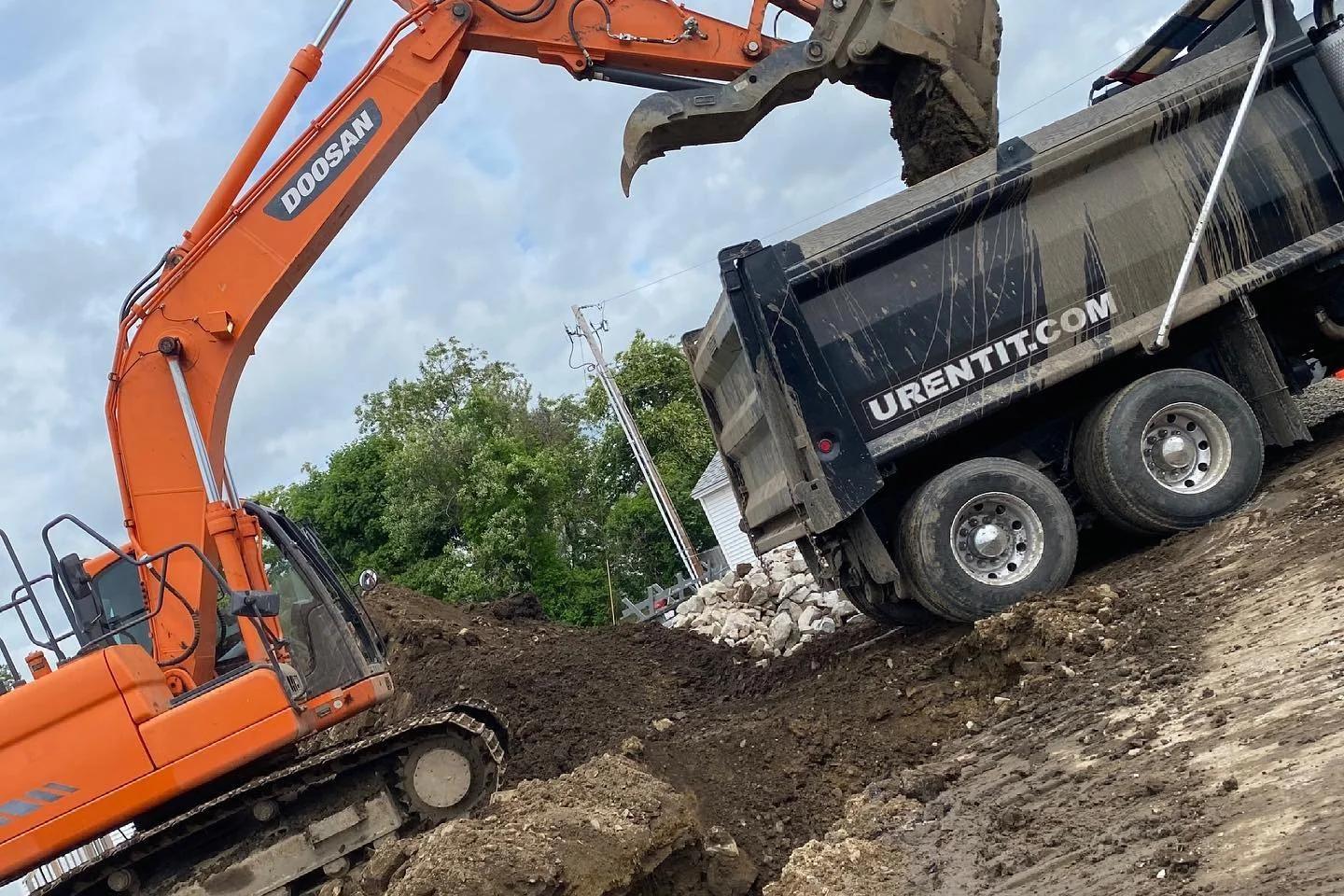
Land leveling and grading
Raw ground rarely slopes the way a finished project needs it to. Grading reshapes the site, cutting high spots and filling low ones, so the finished grade sends water where it should go instead of where gravity happens to take it. This is the step that decides whether a lawn, a driveway, or a foundation stays dry for the next twenty years or turns into a problem the first hard rain.
Drainage and water management
Grading and drainage go together. A site can be perfectly graded and still hold water if there is nowhere for that water to go, which is why drainage work (swales, drain lines, regrading around a low spot) gets planned alongside the grading itself rather than added after something floods.
Site preparation for construction
Before a foundation, a patio, or an addition goes in, the site has to be cleared, graded to the right elevation, and stable enough to build on. This is the fall and early season work that lets a spring project start on schedule instead of waiting on a site that is not actually ready.
Foundation excavation
Digging the hole a foundation sits in still has to happen, and it still has to happen correctly. That means the right depth, the right dimensions, and side conditions that keep the excavation stable until the foundation is poured.
Soil stabilization and erosion control
Some sites need more than grading. The soil will not hold a slope, or the ground erodes with every rain. Stabilizing that soil, and controlling erosion while a project is under construction, protects both the site being built and whatever is downhill from it.
Trenching for utility lines
Water, power, and septic lines all need a trench before they need anything else. Utility trenching is part of the same excavation work, planned around the same site so lines go in at the right depth and in the right place the first time.
Why it works better as one job, not six
Every one of these tasks touches the same dirt. Grading affects drainage, and drainage affects where a foundation can go. A utility trench cut before grading is finished has to be protected or redone. One crew running the whole sequence keeps those steps in order, instead of juggling separate contractors who are not talking to each other about the same site.
Before any of it starts, New Hampshire and Maine both require underground utilities to be located and marked. Riverview calls Dig Safe at 811 on every job before a bucket touches the ground. That call, and the mandatory waiting period after it, is part of the schedule on any excavation project, not an optional extra.
Frequently asked questions
Do I need all of these services, or just some of them?
Most projects only need part of this list. A drainage fix does not need foundation excavation, and a foundation dig does not always need erosion control. The site visit is where the actual scope gets figured out.
How do I know if my property has a drainage problem or a grading problem?
Often it is both, since poor grading is usually what causes the drainage problem in the first place. That is easier to diagnose on site than to guess at from a description.
Can this work happen at the same time as a build, or does it have to happen first?
Site prep, grading, and utility trenching happen before or at the very start of construction. Trying to grade or trench around a finished structure is slower and more limited than doing it while the site is still open.
Have a project that starts with excavation or grading? Riverview Contracting handles land leveling, drainage, site prep, foundation excavation, and utility trenching across the Seacoast. Call or text 207-651-7693, or request a free estimate. We reply the same business day.