
A frozen water or septic line is not a minor inconvenience. It is a house with no working water or a tank that cannot be pumped until the ground thaws, and both usually show up at the worst possible time.
Depth is the real protection
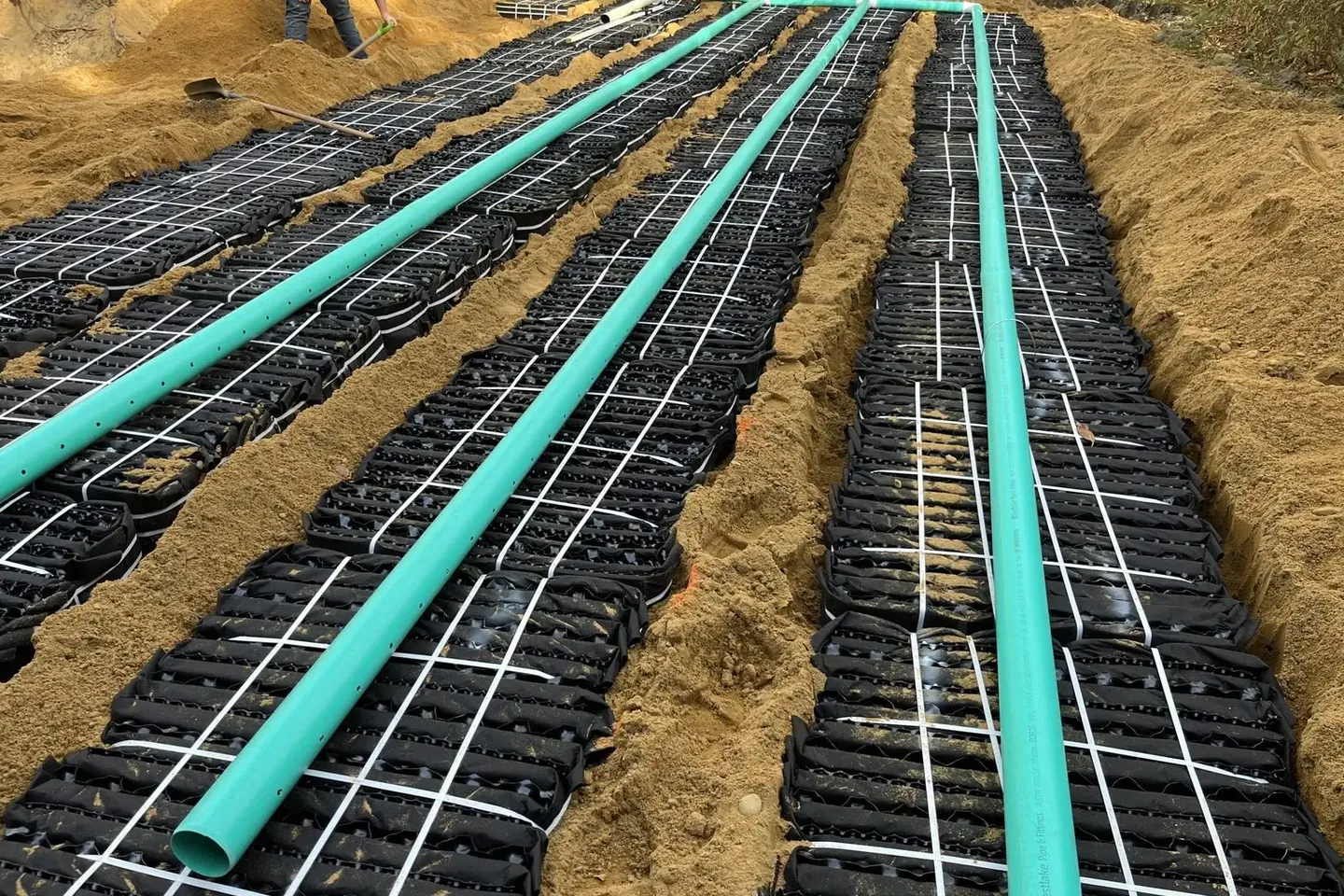
Water and septic lines are buried below the frost line specifically so a normal New England winter does not reach them. Maine’s own septic rules say it the same way. Any tank, box, or delivery pipe set above the expected frost depth has to be insulated or otherwise protected from freezing. Lines that were installed too shallow, or that have settled closer to the surface over the years, are the ones that freeze. This is also why a line that has been fine for years can still freeze in a particularly cold or low snow winter, since snow cover itself acts as insulation and a thin snow year removes some of that protection.
Signs a line is at risk
Reduced water pressure or flow that gets worse in cold weather. A section of yard where snow melts faster or slower than everywhere else, which can point to a line running warmer or colder than the surrounding ground. Any past freeze issue on the property, since a line that has frozen once is more likely to do it again without a fix.
What to do before the ground locks up
Have a septic tank pumped before winter if it is due, and especially before a house sits empty for the season, since a tank left full for months with no warm water coming in gets very cold and can freeze. See our septic pumping guidance for the timing on that. Address any known shallow or previously frozen section of line while the ground is still workable, whether that means re-burying it deeper or adding insulation. And know where the shutoff is in case a freeze does happen, since that is the first thing that matters in an actual emergency.
Frequently asked questions
How deep does a water or septic line need to be to avoid freezing?
It depends on the specific site and local frost depth, which is why a line that was fine on one property can still be a problem on another. This gets evaluated site by site.
What should I do the moment I suspect a line has frozen?
Shut off water to that line if you can and call for emergency help rather than trying to thaw it yourself, since a frozen pipe can crack and cause a bigger problem once it thaws on its own.
Can a shallow line be fixed without digging up the whole yard?
Often yes. Many fixes only need to open the ground along the specific run rather than the entire yard.
Do not wait for a frozen line to find out where the risk is. Riverview Contracting handles septic, water, and emergency line work across the Seacoast, from Rochester and Rye to York and Lebanon. Call or text (207) 651-7693, or request a free estimate. We reply the same business day.