
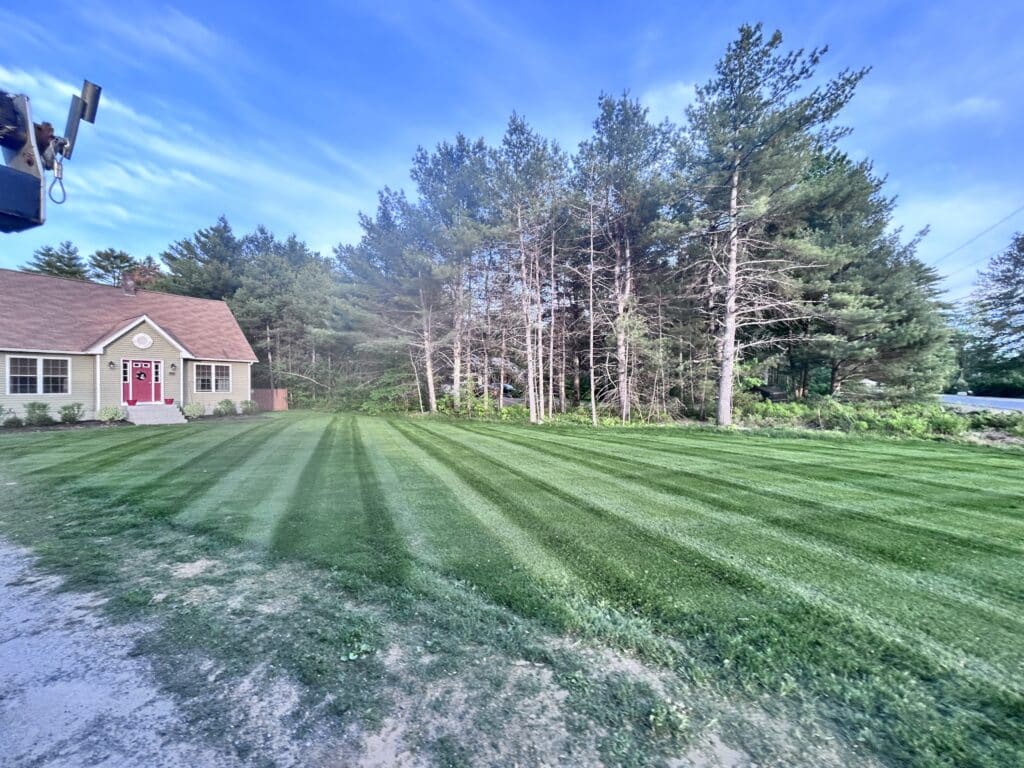
Maintaining a lush, green lawn requires more than just regular mowing and watering. Two essential lawn care practices that significantly enhance the health and appearance of your turf are aeration and overseeding. These practices are particularly beneficial in regions like New England, where soil compaction and seasonal stress can affect grass growth.
Understanding Lawn Aeration
What Is Lawn Aeration?
Lawn aeration is the process of perforating the soil with small holes to allow air, water, and nutrients to penetrate the grassroots. This practice alleviates soil compaction, which is common in areas with heavy foot traffic or clay-heavy soils. Aeration promotes deeper root growth, leading to a healthier and more resilient lawn.
Benefits of Aeration
- Improved Soil Structure: By reducing compaction, aeration enhances the soil’s ability to absorb water and nutrients.
- Enhanced Root Development: With better access to essential resources, grass roots can grow deeper and stronger.
- Increased Microbial Activity: Aeration encourages beneficial microorganisms in the soil, which help decompose organic matter and recycle nutrients.
- Reduced Thatch Build-up: The process helps break down thatch, the layer of dead grass and roots that can suffocate your lawn.
When to Aerate
The best times to aerate your lawn are during the growing seasons: early spring or early fall. In New England, early fall is often preferred as it allows grass to recover and establish before winter. It’s important to aerate when the soil is moist but not overly wet to ensure effective penetration.
The Importance of Overseeding
What Is Overseeding?
Overseeding involves spreading grass seed over an existing lawn to fill in bare spots, improve turf density, and enhance the lawn’s color. This practice introduces new grass varieties that are more resistant to disease, pests, and environmental stressors.
Benefits of Overseeding
- Enhanced Lawn Density: Fills in thin or bare areas, creating a fuller, more uniform lawn.
- Improved Disease Resistance: New grass varieties can offer better resistance to common lawn diseases.
- Increased Drought Tolerance: Some grass types introduced during overseeding are more drought-tolerant, reducing the need for frequent watering.
- Better Pest Resistance: Overseeding can help outcompete weeds and reduce pest infestations.
When to Overseed
Overseeding is typically done in conjunction with aeration. In New England, early fall is ideal, as the soil is still warm, promoting seed germination, and the cooler air temperatures reduce stress on the new grass.
Combining Aeration and Overseeding
Performing aeration and overseeding together maximizes the benefits of both practices. Aeration creates optimal conditions for seed-to-soil contact, which is crucial for seed germination. The holes created during aeration allow seeds to settle into the soil, improving their chances of successful germination and establishment.
Steps for Combined Aeration and Overseeding
- Prepare the Lawn: Mow the grass to a shorter length and remove any debris.
- Aerate the Lawn: Use a core aerator to perforate the soil, creating holes approximately 2–4 inches apart.
- Apply Seed: Spread the appropriate type and amount of grass seed over the lawn.
- Water the Lawn: Keep the soil consistently moist to promote seed germination.
- Maintain the Lawn: Once the grass has established, reduce watering frequency and resume regular lawn care practices.
Post-Aeration and Overseeding Care
Proper care after aeration and overseeding is crucial to ensure successful establishment of new grass.
- Watering: Water the lawn lightly and frequently to keep the soil moist but not saturated.
- Mowing: Wait until the new grass reaches a height of about 3 inches before mowing.
- Fertilizing: Apply a balanced fertilizer to support new grass growth.
- Weed Control: Avoid using herbicides until the new grass is well-established to prevent damage.
Hiring a Professional Lawn Care Service
While DIY aeration and overseeding are possible, hiring a professional lawn care service can ensure the job is done correctly and efficiently. Professionals have the expertise and equipment to perform these tasks effectively, leading to better results.
Benefits of Professional Services
- Expertise: Professionals can assess your lawn’s specific needs and recommend the best course of action.
- Proper Equipment: Access to high-quality equipment ensures effective aeration and overseeding.
- Time Savings: Hiring professionals frees up your time for other activities.
- Guaranteed Results: Many services offer satisfaction guarantees, providing peace of mind.
Aeration and overseeding are vital practices for maintaining a healthy, vibrant lawn. By improving soil structure, enhancing grass density, and introducing more resilient grass varieties, these practices contribute to a lawn that is not only aesthetically pleasing but also more resistant to environmental stressors. Whether you choose to undertake these tasks yourself or hire a professional, incorporating aeration and overseeding into your lawn care routine can lead to long-term benefits and a lawn that thrives season after season.